Formative Years
Veer Budhu Bhagat’s early life was shaped by his upbringing in the Oraon tribe, surrounded by traditions, nature, and a strong sense of community. From a young age, he was deeply influenced by the stories of resistance against external threats and the harsh realities faced by his people under British rule.
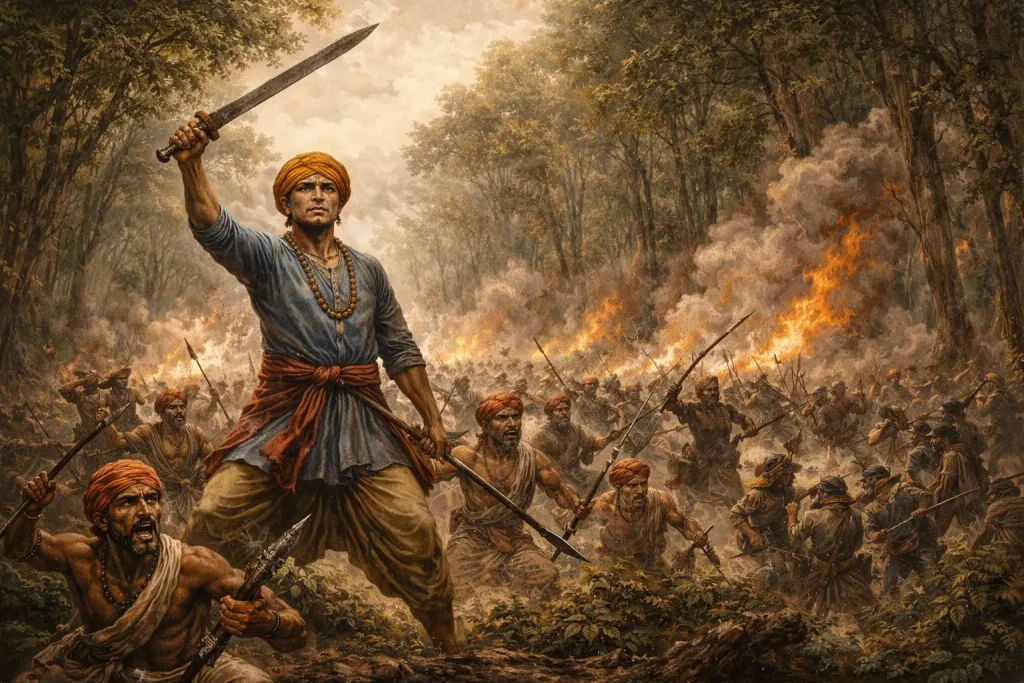
Rebellion Period
Key movements and attacks on British authority
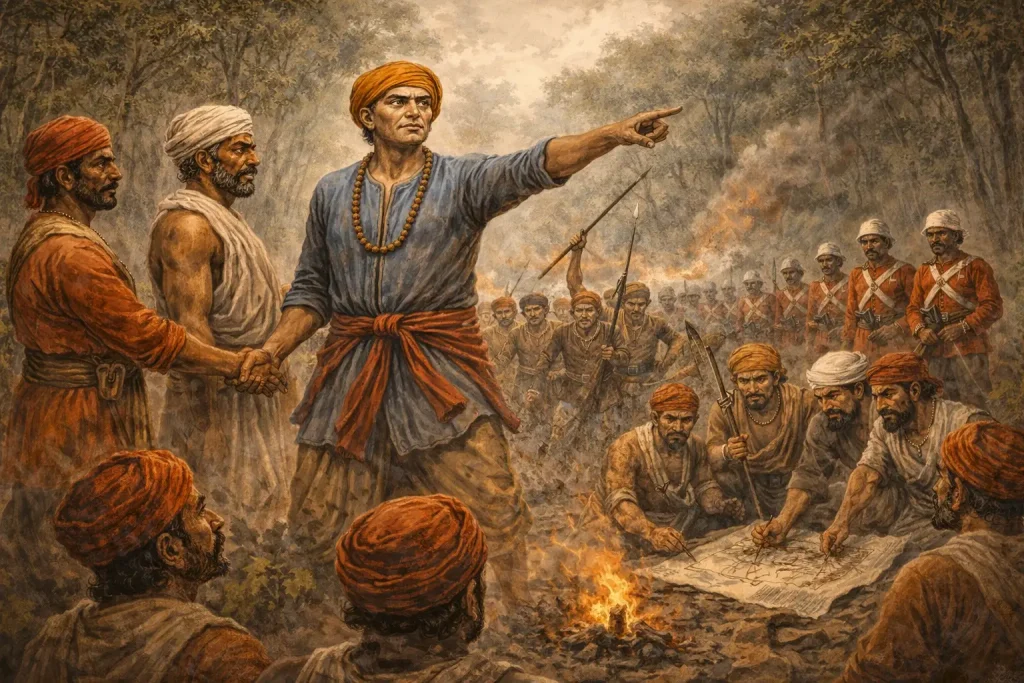
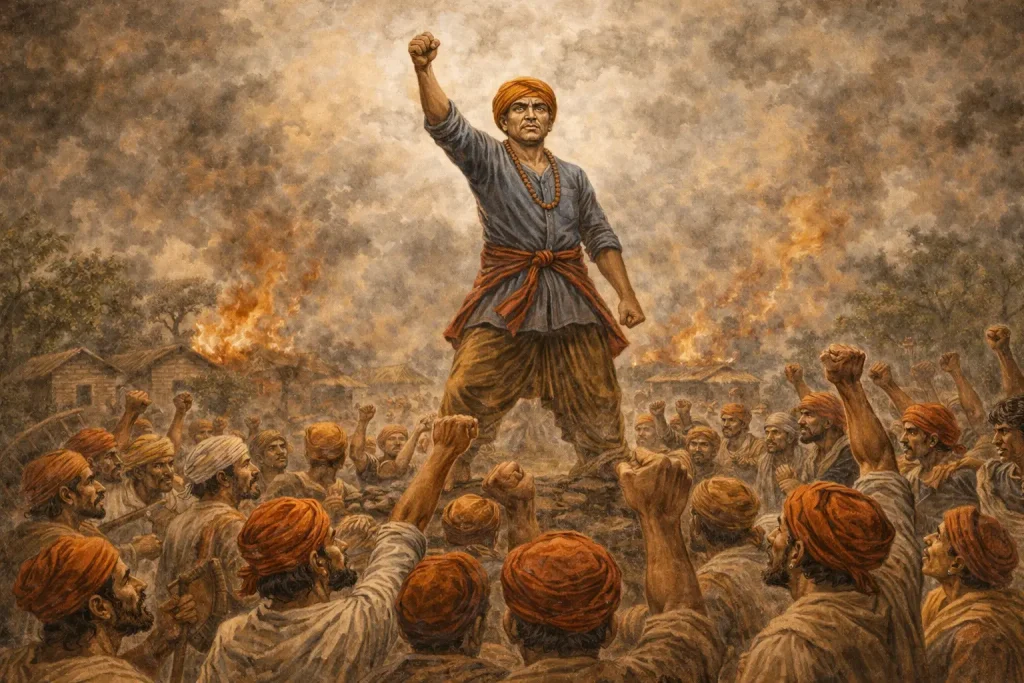
Veer Budhu Bhagat united the Kol, Munda, and Oraon communities against British interference.
Attack on British Revenue Officials
Rebels targeted British revenue collectors and local agents who imposed heavy land taxes.
Destruction of Police Stations
Police outposts symbolizing British authority were attacked and destroyed.
Resistance Against Zamindars & Moneylenders
Rebels attacked their properties to protest unfair land seizures and debt exploitation.
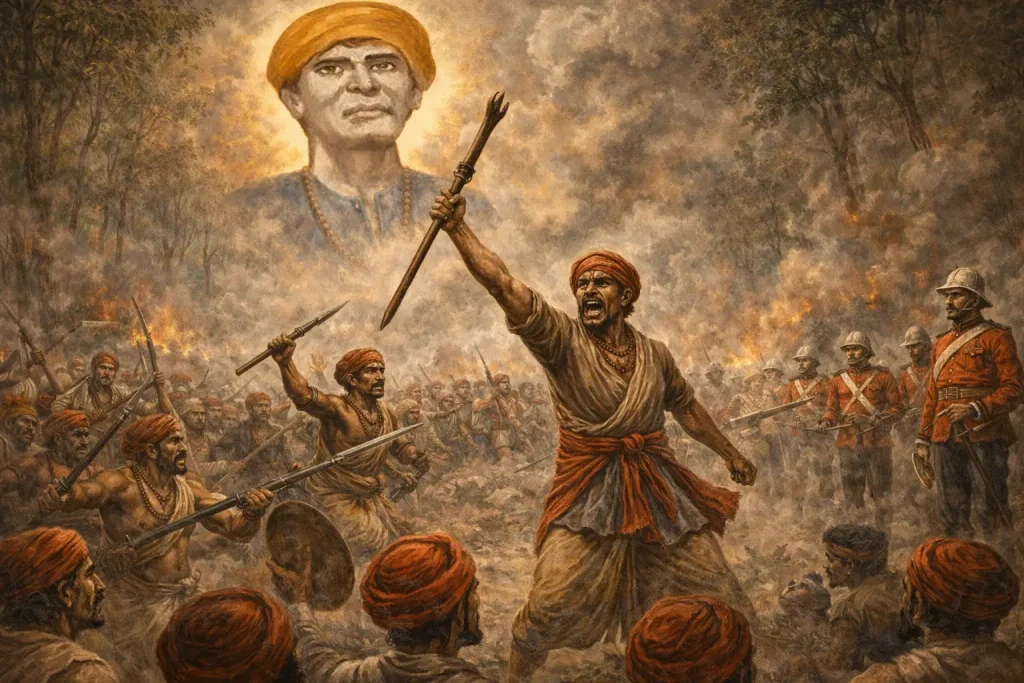
Guerrilla Warfare in Forest Regions
Using deep forest knowledge, Budhu Bhagat’s forces launched surprise attacks
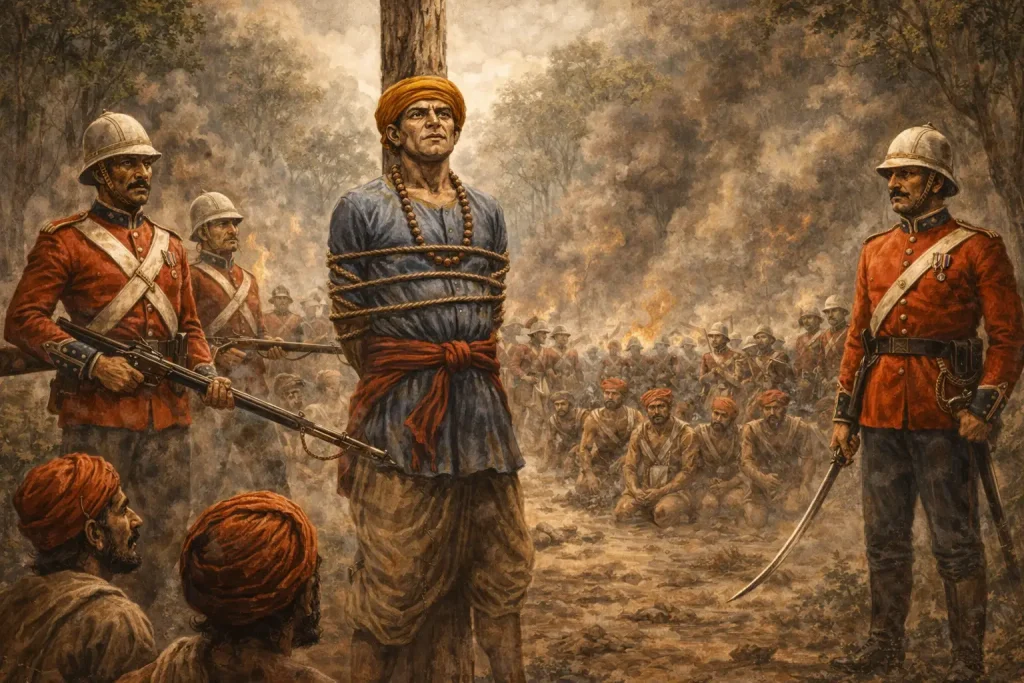
Final Confrontation (1832)
Veer Budhu Bhagat fought bravely until he was captured and executed in 1832, becoming a martyr for tribal resistance.
Final Phase & Aftermath
As the rebellion spread across the Chotanagpur region, the British deployed stronger military forces to crush the uprising. Armed troops entered forest villages, conducted searches, and carried out harsh reprisals against suspected rebels.