
Core Ideals
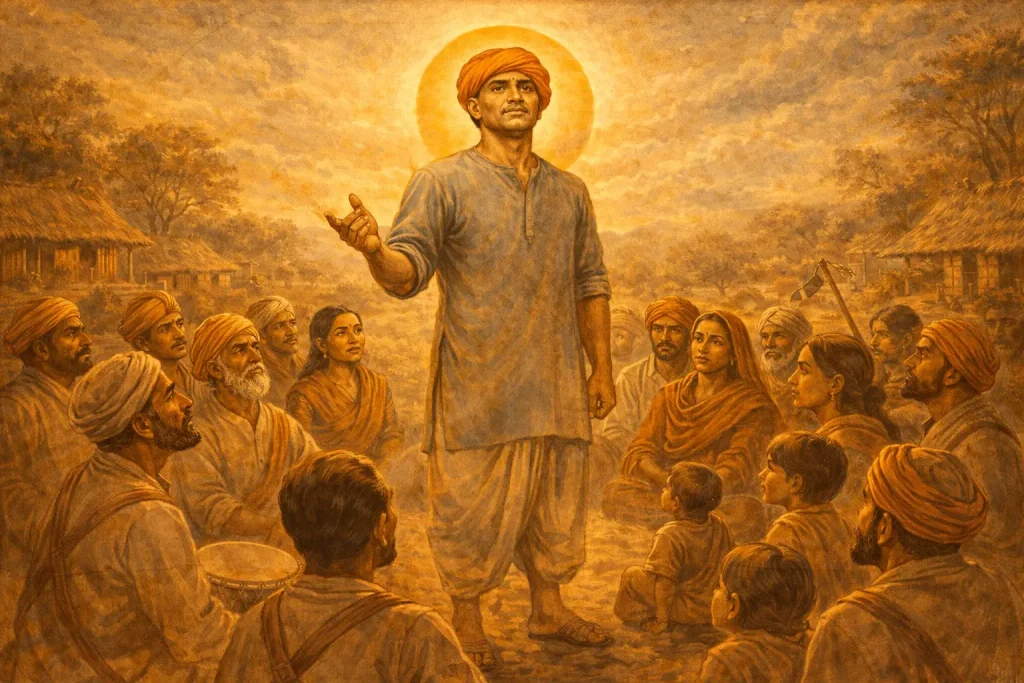
Freedom from colonial rule meant more than the end of foreign authority; it represented the restoration of dignity, rights, and identity for tribal communities. Under oppressive policies, their land, forests, and traditional ways of life were controlled and exploited, leaving them deprived of autonomy. The vision of freedom called for reclaiming these natural rights and returning decision-making power to the people. It inspired unity, courage, and collective resistance, encouraging communities to stand together for self-respect and cultural preservation. This aspiration for freedom became a guiding force that strengthened the resolve to build a future based on justice, self-rule, and harmony with their ancestral heritage.
Justice and self-governance for tribal people centered on restoring their rightful authority over land, forests, and community life. For generations, external control disrupted traditional systems that ensured balance, fairness, and shared responsibility. The call for justice sought to protect these customs while establishing equal rights, dignity, and legal recognition. Self-governance meant empowering local leaders and village councils to make decisions rooted in culture and collective welfare. This vision encouraged unity, accountability, and pride, enabling communities to safeguard their heritage while shaping a future guided by their own values and wisdom.
Cultural & Social Vision
A vision rooted in preserving tribal heritage, strengthening community bonds, and nurturing values of dignity, harmony, and collective well-being for future generations.
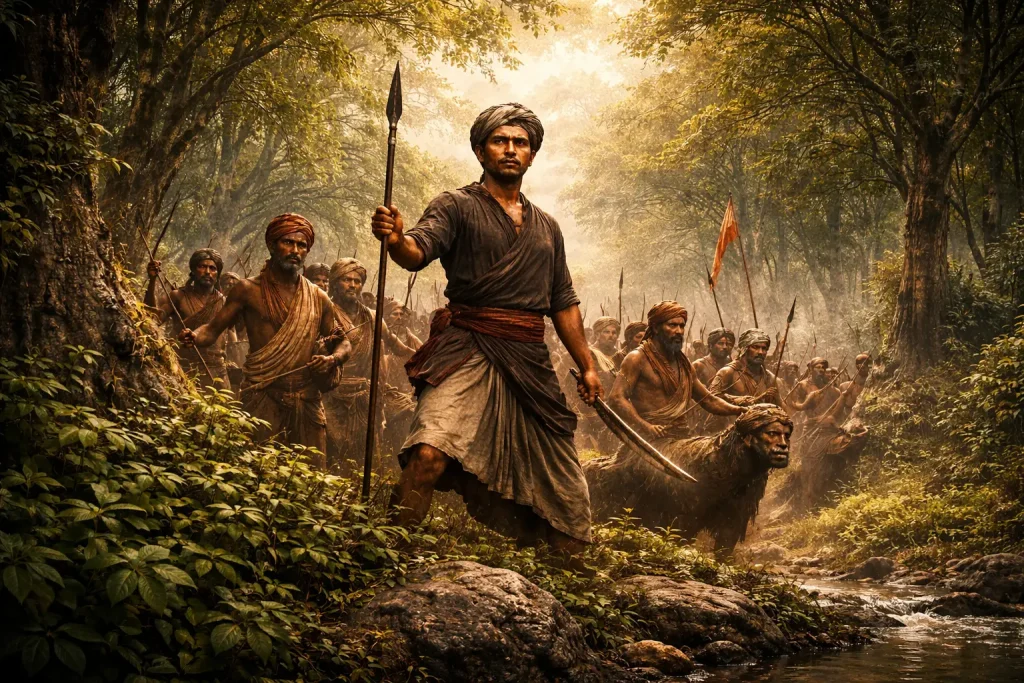
Protection of Land, Forests, and Traditions
This scene represents the struggle to protect ancestral land, forests, and cultural traditions from exploitation and external control. The leader stands as a symbol of resistance, guiding the community to defend their natural resources, sacred forests.
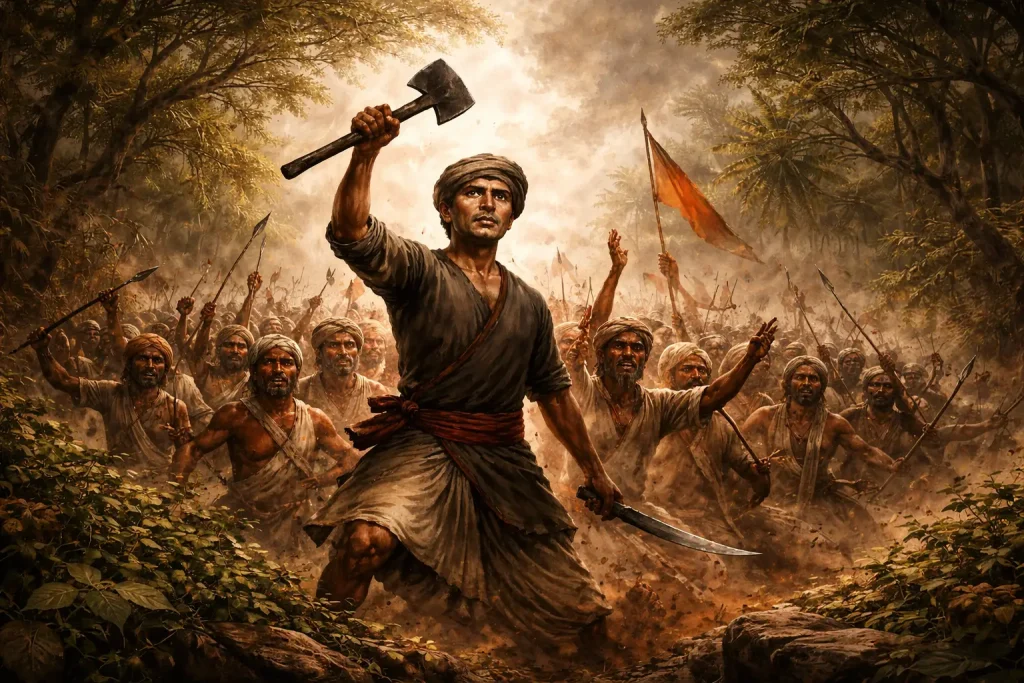
Resistance to Exploitation and Forced Taxes
This theme highlights the collective resistance of local communities against exploitation and the imposition of unfair taxes. Under strong leadership, people rose to challenge systems that drained their labor and resources, pushing them into poverty.
Relevance
Veer Budhu Bhagat’s struggle remains deeply relevant in modern times as a symbol of tribal identity, unity, and resistance against injustice. His leadership during the uprising demonstrated the power of collective action in protecting land, culture, and traditional rights.
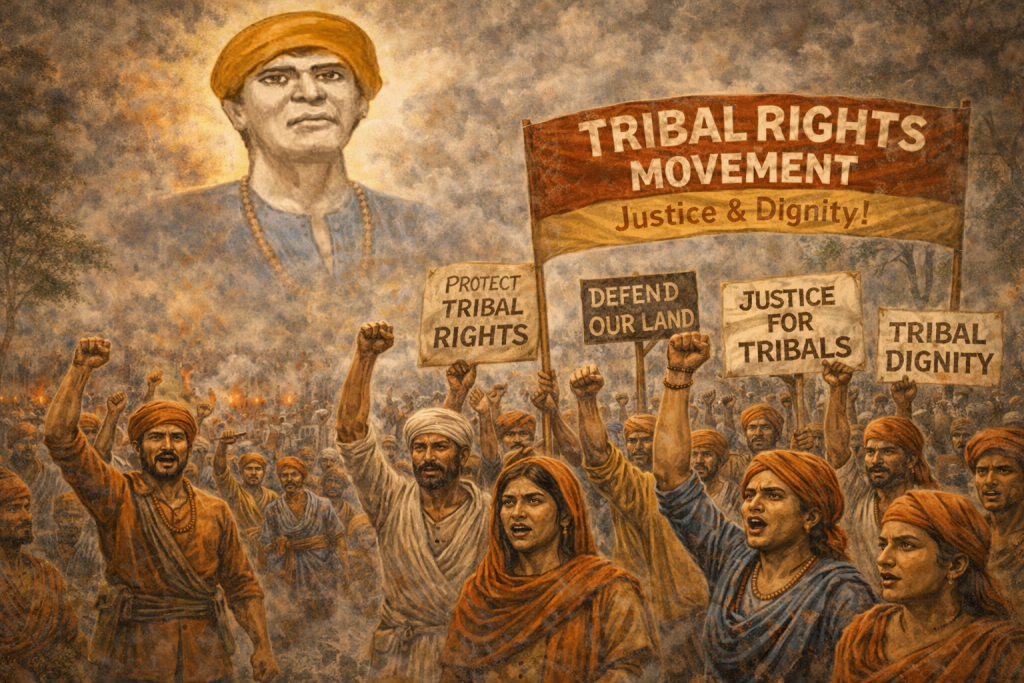
Inspiration for Tribal Rights Movements
Veer Budhu Bhagat’s courageous resistance became a lasting source of inspiration for tribal rights movements across India.
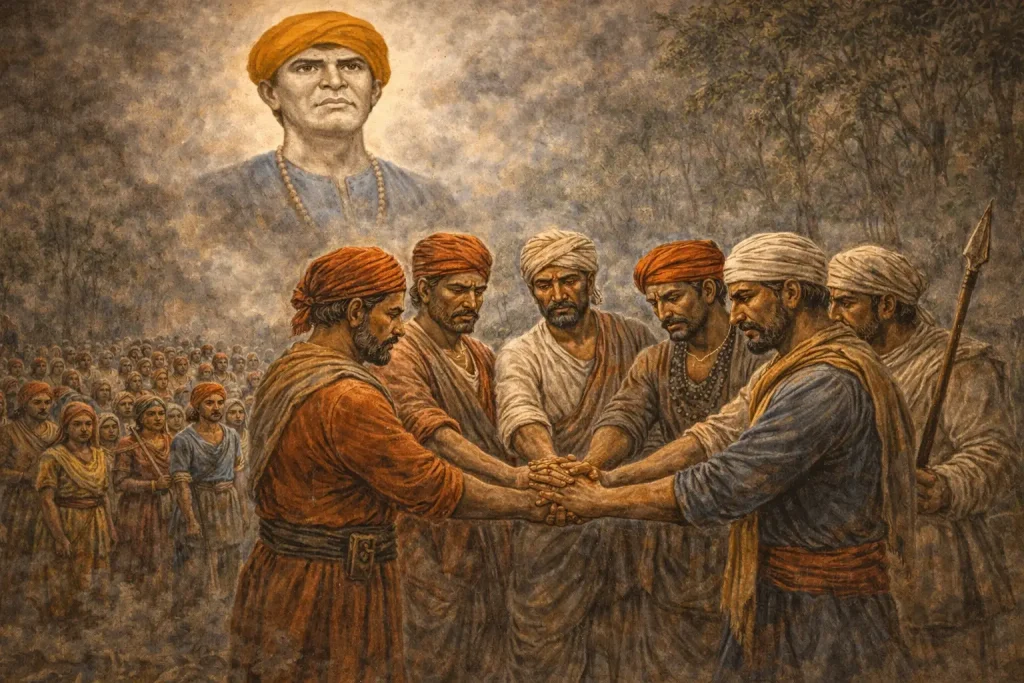
Lessons for Leadership and Unity
Veer Budhu Bhagat’s life teaches powerful lessons about courageous leadership and collective strength.