
Cultural Legacy
Beyond his role as a resistance leader, he represents the preservation of tribal customs, land, and spiritual connection to forests. His legacy continues to inspire cultural awareness, unity, and the protection of indigenous heritage.
Folk Songs and Stories
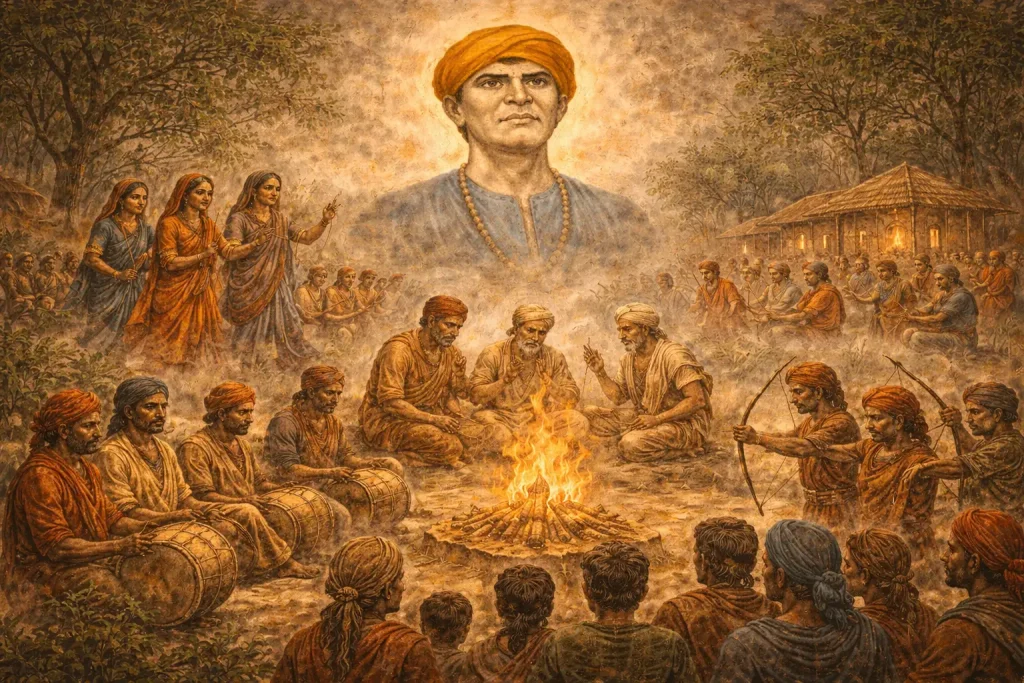
Veer Budhu Bhagat lives on in tribal folklore through songs, ballads, and storytelling traditions passed down across generations.
Cultural Pride and Identity
In oral traditions, Veer Budhu Bhagat is remembered as a protector of land, forests, and tribal dignity.
Fearless Defender
Veer Budhu Bhagat is remembered as a fearless warrior who stood firmly against colonial oppression.
Enduring Spirit of Defiance
Beyond the battlefield, Veer Budhu Bhagat represents the spirit of unwavering resistance.
Memorials & Honors
Veer Budhu Bhagat is remembered not only as a courageous tribal leader but also as a lasting symbol of resistance and dignity. Across Jharkhand and surrounding regions, his memory is preserved through memorials, statues, commemorative events, and public recognition that honor his sacrifice during the Kol uprising of 1831–32. These memorials serve as physical reminders of his bravery and as educational landmarks for future generations.
In several districts of Jharkhand, statues of Veer Budhu Bhagat have been installed in town centers, village squares, and near government institutions. These statues typically depict him in traditional attire, often with a determined expression, symbolizing his fearless stand against colonial rule. Such monuments are not merely decorative; they represent community pride and collective remembrance. Local residents gather at these sites during important anniversaries to pay tribute through floral offerings, cultural programs, and speeches recounting his heroic deeds.
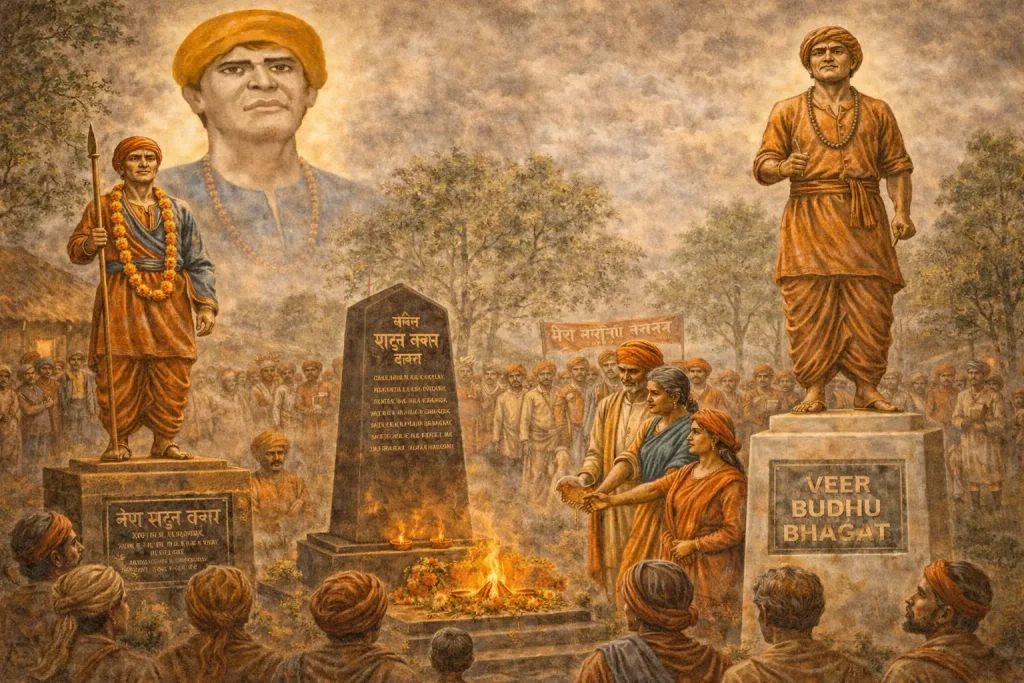
Educational institutions, roads, and public spaces have also been named after him, ensuring that his name continues to be spoken in everyday life. Schools bearing his name play a particularly important role in spreading awareness among young students about tribal history and the sacrifices made for justice and land rights. Through textbooks, special lectures, and commemorative programs, students learn about his leadership, strengthening their connection to indigenous heritage.
Each year, commemorative events are organized to mark his martyrdom day. These gatherings often include traditional dance performances, folk songs, storytelling sessions, and community meetings. Elders recount the bravery of Veer Budhu Bhagat and the unity he inspired among tribal communities. Cultural troupes perform songs that celebrate his resistance, reinforcing the oral traditions that have preserved his legacy for generations. Such events blend history with living culture, keeping his spirit alive in collective memory.
Government recognition has also contributed to honoring his legacy. State-level programs highlighting tribal freedom fighters often include Veer Budhu Bhagat among prominent figures who resisted colonial oppression. His contribution is increasingly acknowledged in discussions about India’s broader freedom movement, emphasizing that tribal uprisings were integral to the struggle for independence. This recognition helps correct historical narratives that once overlooked indigenous resistance leaders.
Beyond physical memorials, his greatest honor lies in the continued inspiration he provides to tribal rights movements. Activists and community leaders often invoke his name when advocating for land rights, forest protection, and social justice. In this way, his memory functions as a guiding force rather than just a historical reference.